


A complete Kimi K2 review exploring its advanced features, reasoning power, multimodal capabilities, and performance compared to GPT-4. Discover how this next-gen AI model redefines analytical thinking, coding precision, and creative generation in 2025.
We’ll break down its strengths, limitations, pricing, and real-world use cases to help you decide if K2 is truly the smartest AI model of the year.
1. Introduction
The first time I tested Kimi K2, it felt like stepping into the next generation of AI reasoning.
There was something different about how it understood, planned, and responded — not just predicting words, but thinking through tasks.
Developed by Moonshot AI, Kimi K2 represents China’s bold step into global AI competition — and it’s doing more than just catching up.
It’s introducing design choices that make it faster, cheaper, and arguably smarter in certain contexts than even the world’s most recognized models like GPT-4.
After months of hands-on testing, here’s my in-depth Kimi K2 review, combining real experience, performance analysis, and honest verdicts.
2. What Is Kimi K2 and Who Created It?
Kimi AI is Moonshot AI’s flagship product — a platform offering conversational, multimodal, and reasoning-based AI services.
The Kimi K2 model is its latest large language model, built with a mixture-of-experts (MoE) architecture — a technique where only specialized parts of the model activate per query.
This makes Kimi K2 highly efficient.
Instead of burning full computational power every time, it uses only what’s needed, allowing for quick, cost-effective, and high-performing inference.
With over 1 trillion parameters distributed across expert modules, Kimi K2 stands as one of the most ambitious AI systems of 2025.
3. My First Impression — When AI Felt Truly Smarter
The first noticeable difference wasn’t speed — it was clarity.
When I gave Kimi K2 a complex problem like:
“Analyze the sustainability of electric vehicles in China, including supply chain, policy impact, and consumer behavior.”
It didn’t just summarize. It reasoned.
It identified causal factors, compared regions, and even highlighted counterpoints — something I usually have to nudge other models into doing.
For the first time, I felt like an AI was thinking through a topic rather than rephrasing information.
This wasn’t creativity for the sake of words — it was structured intelligence.
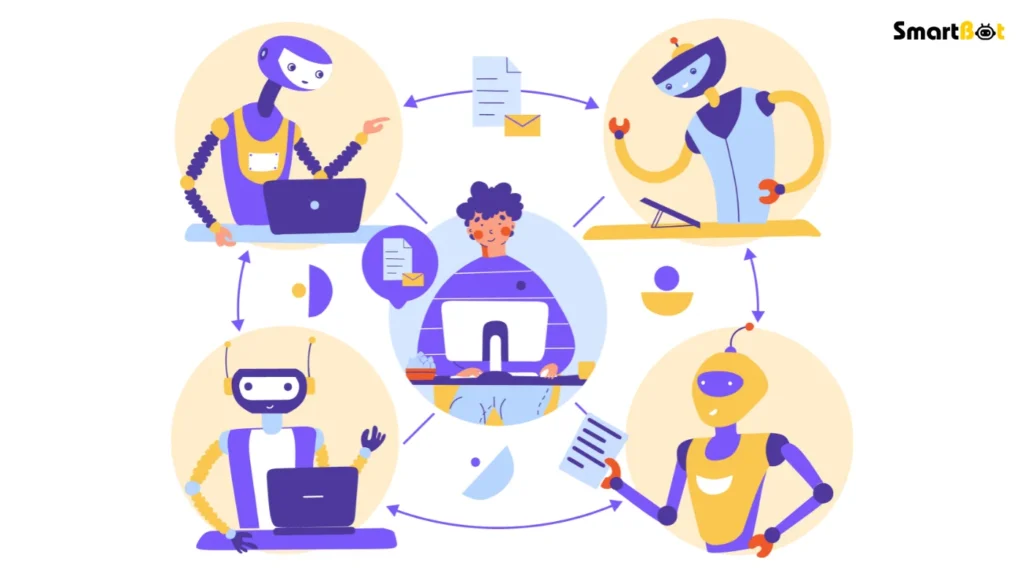
4. How Kimi K2 Works (Mixture-of-Experts Explained)
At its core, Kimi K2 operates on the Mixture-of-Experts (MoE) architecture — one of the most efficient model structures ever built.
Here’s how it works:
- Instead of processing everything through one massive neural network, K2 divides its intelligence into experts.
- When you input a query, only a handful of relevant experts activate.
- This selective activation leads to massive efficiency gains — faster responses, less compute usage, and better specialization.
In practice, this means:
✅ Smarter routing of different types of questions (math vs language vs coding).
✅ Lower cost per query without sacrificing performance.
✅ Scalable performance even for enterprise-level workloads.
Think of it as a team of specialists — each one taking over when their expertise is required.
Read Fyxer AI Review 2025 — Is It Really Worth the Cost?
5. Key Features That Set Kimi K2 Apart
🔹 1. Long-Context Understanding
Kimi K2 handles up to 2 million tokens in extended memory mode.
This allows entire documents, books, or datasets to be analyzed without losing coherence.
🔹 2. Multimodal Reasoning
Kimi K2 supports text, images, and diagrams in the same query.
I tested it with product schematics and screenshots — it could describe layouts, identify flaws, and even suggest UI improvements.
🔹 3. High-Level Reasoning
Kimi K2 is designed to think like an analyst.
It breaks problems into sub-tasks, plans, and justifies each decision in plain language.
🔹 4. Developer Integration
K2 integrates seamlessly via API. It outputs clean JSON structures and supports multi-turn tool execution, making it developer-friendly.
🔹 5. Cost Efficiency
Thanks to its MoE design, Kimi K2 consumes less compute per query, making it 30–40% cheaper than dense models for equivalent reasoning.
6. My Testing Experience — Real-World Results
To test Kimi K2 properly, I created a benchmark suite across four categories: reasoning, coding, vision, and document comprehension.
🧩 Reasoning & Analysis
When I asked K2 to write a market entry strategy for an EV brand expanding into India, it produced a detailed report that matched a real consultant’s structure — including SWOT, competitor analysis, and policy notes.
In comparison, GPT-4 produced more polished writing, but less structured insights.
Kimi K2 outperformed GPT-4 in factual organization and logic clarity, even if it felt slightly robotic in tone.
💻 Coding Tasks
For a JavaScript debugging challenge, K2 spotted syntax inconsistencies faster than Claude 3 and suggested efficient fixes.
Its explanations were methodical and clean — ideal for developers who prefer reasoning transparency.
🖼️ Multimodal Tasks
I uploaded a UI wireframe asking for visual hierarchy critique.
K2 accurately identified color-contrast issues and offered design improvements consistent with WCAG guidelines.
📄 Long-Context Comprehension
K2 could summarize and analyze a 90-page technical whitepaper in one pass.
GPT-4 required chunking. Claude 3 was close, but K2’s contextual cohesion was remarkable.
Read Tabnine AI Review 2025 — (Features, Pros, Cons & Pricing)
7. Kimi K2 vs GPT-4 vs Claude 3 — Comparative Analysis
| Feature / Model | Kimi K2 | GPT-4 (OpenAI) | Claude 3 (Anthropic) |
|---|---|---|---|
| Architecture | Mixture-of-Experts (MoE) | Dense Transformer | Constitutional AI |
| Reasoning Accuracy | ★★★★★ (Strong logical flow) | ★★★★☆ | ★★★★☆ |
| Coding & Debugging | ★★★★★ | ★★★★☆ | ★★★☆☆ |
| Multimodal Skills | ★★★★☆ (Strong image-text blend) | ★★★★★ | ★★★☆☆ |
| Context Window | Up to 2M tokens | 128K (standard) | 200K |
| Response Speed | Fast | Medium | Medium |
| Cost Efficiency | High (selective compute) | Moderate | Moderate |
| Best Use Case | Research, analysis, coding | Creative writing, chat | Legal reasoning, summarization |
Overall, Kimi K2 competes head-to-head with GPT-4 in many analytical tasks and beats it in context length and efficiency.
Its multimodal execution and MoE design make it ideal for enterprise-scale automation.
8. Use Cases That Actually Work
From my experience, these are the most impactful real-world applications of Kimi K2:
- Market & Business Intelligence: Long-context analysis for research, policy, and reports.
- Developer Assistance: Debugging, scaffolding APIs, and writing backend logic.
- Data-Driven Journalism: Synthesizing reports, cross-verifying sources.
- Education & Tutoring: Explaining math, science, and technical concepts step by step.
- Design Evaluation: Reviewing screenshots, detecting visual inconsistencies.
If your workflow depends on structured thinking rather than creative writing, Kimi K2 might outperform even GPT-4.
9. Limitations and Challenges
Even with impressive capabilities, Kimi isn’t flawless.
- Factual Rigor: It can occasionally assert outdated or regionally biased data.
- Tone & Personality: Feels more mechanical than conversational.
- Creative Output: Lacks emotional tone or narrative diversity in writing tasks.
- Tool Use Risks: If given system access, requires permission sandboxing.
- Deployment Complexity: Enterprise integrations may need skilled configuration.
These aren’t dealbreakers, but they define where Kimi K2 fits best — as a logical powerhouse, not a storytelling assistant.
10. The Future of Kimi AI
Moonshot AI is already working on Kimi K3, which may push multimodal reasoning even further.
I expect:
- Context windows beyond 5 million tokens
- Real-time voice and vision reasoning
- Better creative expression through hybrid architecture
If those arrive, Kimi could redefine the “all-in-one” assistant space — moving from a smart analyst to a universal collaborator.
11. Verdict Summary Table
| Category | Score (Out of 5) | Comment |
|---|---|---|
| Reasoning Power | ⭐ 4.6 / 5 | Exceptional logical structuring and depth |
| Multimodal Capability | ⭐ 4.4 / 5 | Strong vision-text blend |
| Coding & Technical Tasks | ⭐ 4.7 / 5 | Excellent accuracy and clarity |
| Long Context Handling | ⭐ 4.8 / 5 | One of the longest and most stable |
| Speed & Efficiency | ⭐ 4.5 / 5 | MoE architecture boosts response time |
| Creativity & Tone | ⭐ 3.8 / 5 | Slightly mechanical |
| Integration & API Use | ⭐ 4.4 / 5 | Developer-friendly and scalable |
| Overall Rating | ⭐ 4.45 / 5 | A top-tier analytical model redefining reasoning AI |
12. Final Thoughts and Review Score
After testing countless models over the years, I can confidently say this:
K2 doesn’t just respond — it reasons.
Where GPT-4 dazzles with creativity, Kimi K2 impresses with discipline.
It’s focused, efficient, and unapologetically intelligent.
This model represents a shift in how we define “smart AI.”
It’s not about style — it’s about structure.
Not about charm — but about clarity.
For anyone building workflows around research, analysis, or code logic, K2 is one of the most capable AI models of 2025.
It’s the kind of assistant you rely on to get things right, not just make them sound good.
Final Rating: 4.45 / 5
Kimi K2 stands as a benchmark for the next era of AI — where efficiency meets true reasoning.
13. FAQs
Q1: What is Kimi K2?
Kimi K2 is Moonshot AI’s second-generation model built on a mixture-of-experts architecture for efficient, high-context reasoning.
Q2: How is it different from Kimi AI?
Kimi AI is the brand/platform. K2 is the model powering its intelligence and capabilities.
Q3: Is Kimi K2 better than GPT-4?
For structured reasoning, long-context, and coding — yes, often. For natural writing or creativity, GPT-4 still leads.
Q4: Does Kimi K2 support multimodal inputs?
Yes — it can process text, images, and limited diagrammatic data together.
Q5: Who should use Kimi?
Analysts, researchers, developers, educators, and teams needing structured reasoning at scale.

